
DBJ.METHOD
Important This document is single source of truth.
It contains the taxonomy hierarchy and the terminology defined by it.
These definitions are to be used company wide, with no changes or reinterpretations.
- Common, shared and simple Taxonomy is the underlying essential mesh holding the Organisation universe together.
- It gives both the structure and naming of structure elements.
- It is the essential common language of the organization
DBJ Taxonomy Lineage
Beside good old “abstract to concrete” philosophy, DBJ Taxonomy maps to the DBJ ADM (mapped onto TOGAF ADM)
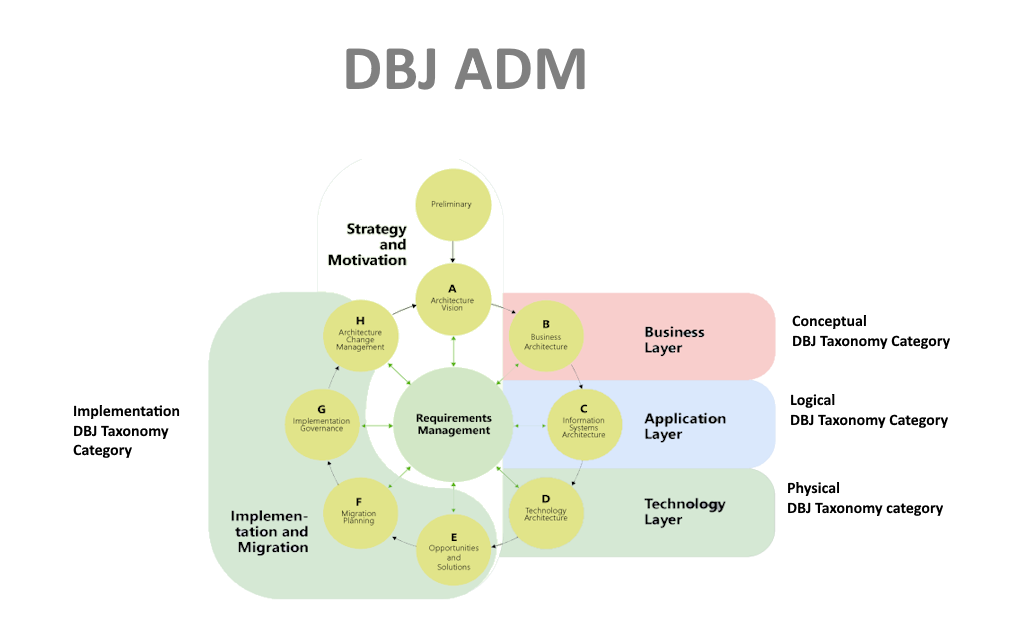
Thus here is where the DBJ Taxonomy is “coming from”.s
Taxonomy Hierarchy Shape
And Taxonomy meta-data: the meaning of the nodes in regards to their position in the hierarchy
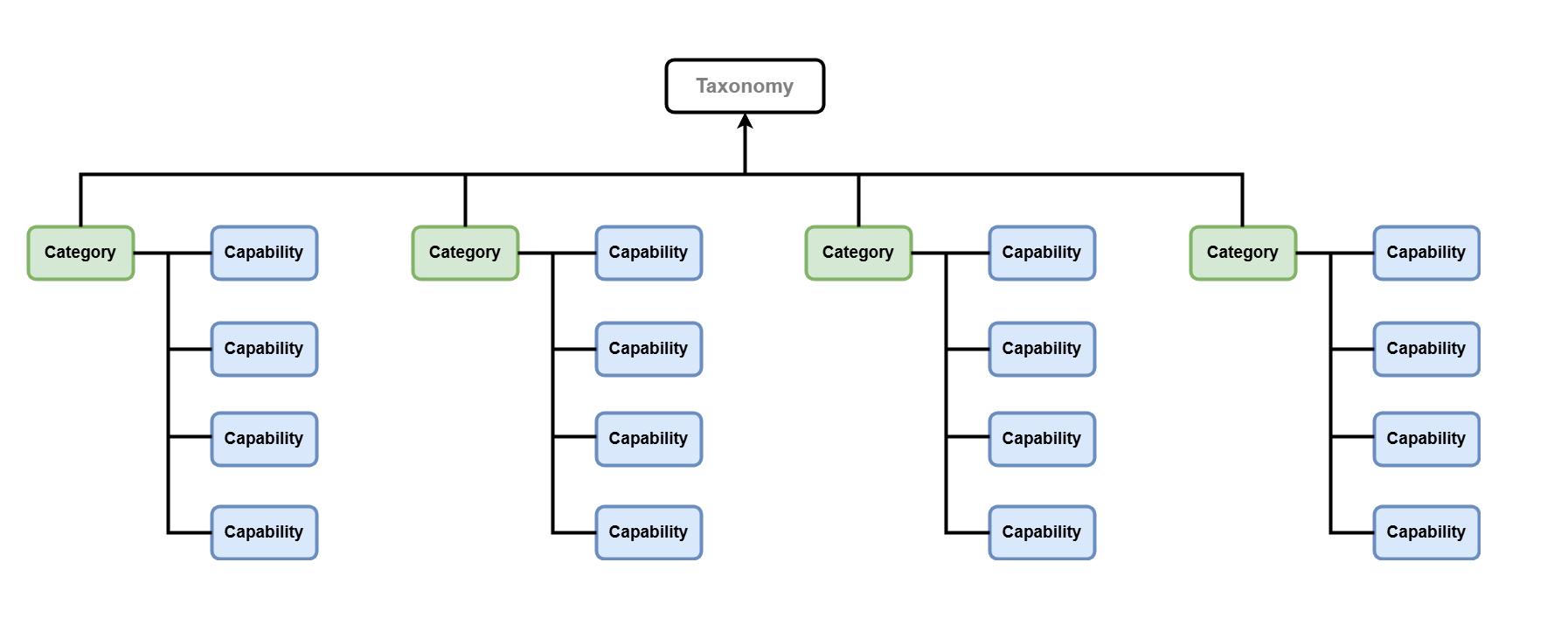
Taxonomy Meta Data defines only two elements
- Category
- Four Categories total
- Capability
- Each Category has total four offspring nodes: Capabilities
Thus we say: Taxonomy entities are uniquely defined by two metadata elements.
DBJ Core Taxonomy
Meta data elements are given names to define the Taxonomy in the context of an commercial exnteprise based on IT.
├── Conceptual
│   ├── Business
│   ├── Information
│   ├── Application
│   └── Technology
├── Logical
│   ├── Data Management
│   ├── Integration
│   ├── Platform
│   └── Security
├── Physical
│   ├── Compute
│   ├── Infrastructure
│   ├── Network
│   └── Storage
└── Implementation
    ├── Deployment
    ├── Development
    ├── Monitoring
    └── Operations
Warning Names of the nodes on the Taxonomy hierarchy are official Organization Terminology.
Important Entities in the core are non-divisible information core particles. Thus they are axioms of truth for the standard modern organization focused on producing software products.
Commercial Organization Positioning in the global info space
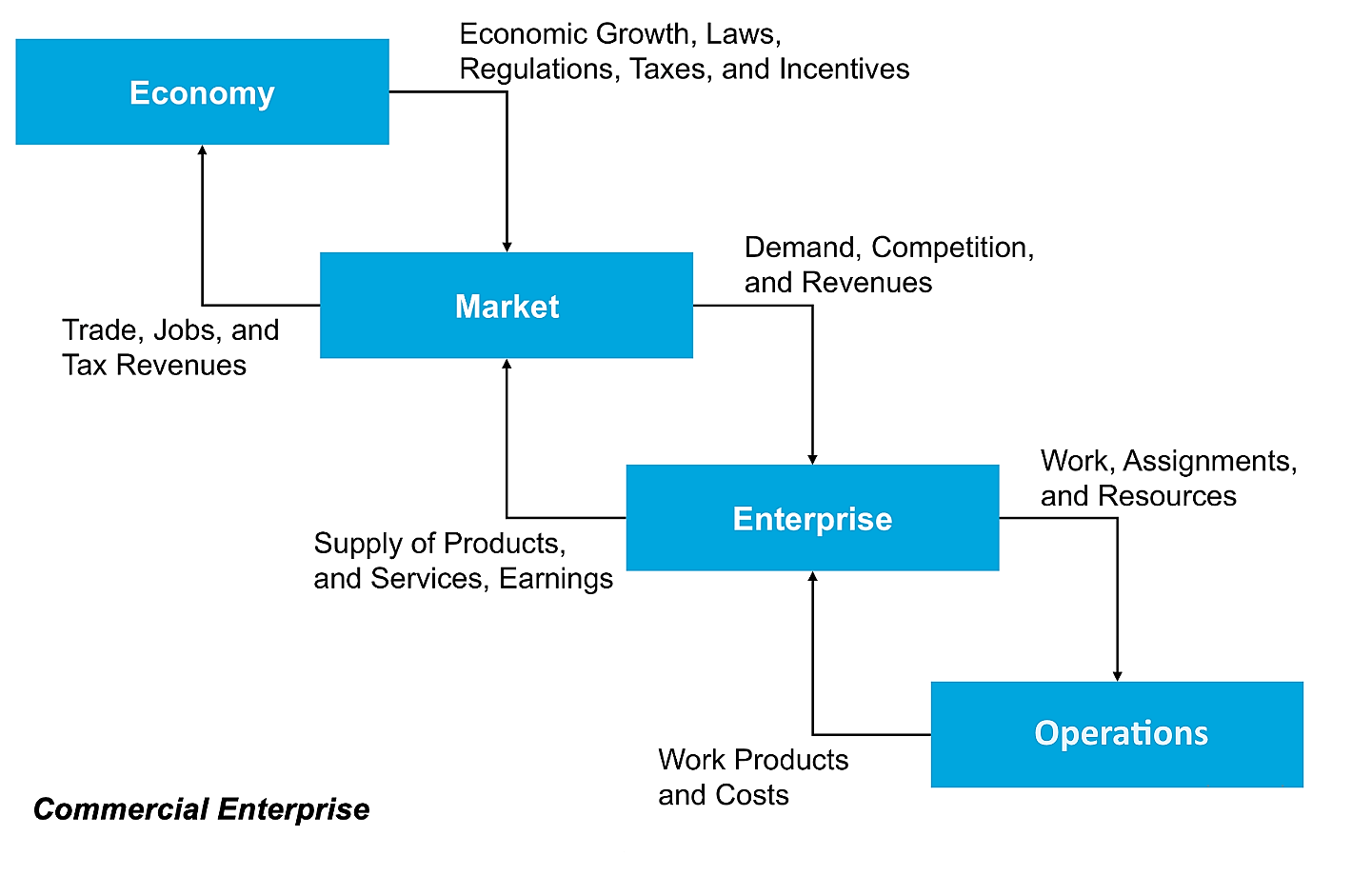
Vocabulary
The “abstract to concrete” progression
Traces to Aristotle’s Metaphysics and Posterior Analytics — the idea that genuine knowledge (episteme) moves from universals (genus, form) down to particulars. Aristotle’s hierarchy of genus → species → individual is the direct ancestor of every taxonomic tree since, including Porphyry’s Tree (3rd century AD, Porphyry’s commentary on Aristotle’s Categories) — a top-down branching hierarchy from substance down to individual, structurally identical to the DBJ Taxonomy.